Почему я отказался от большого плана для Letopis
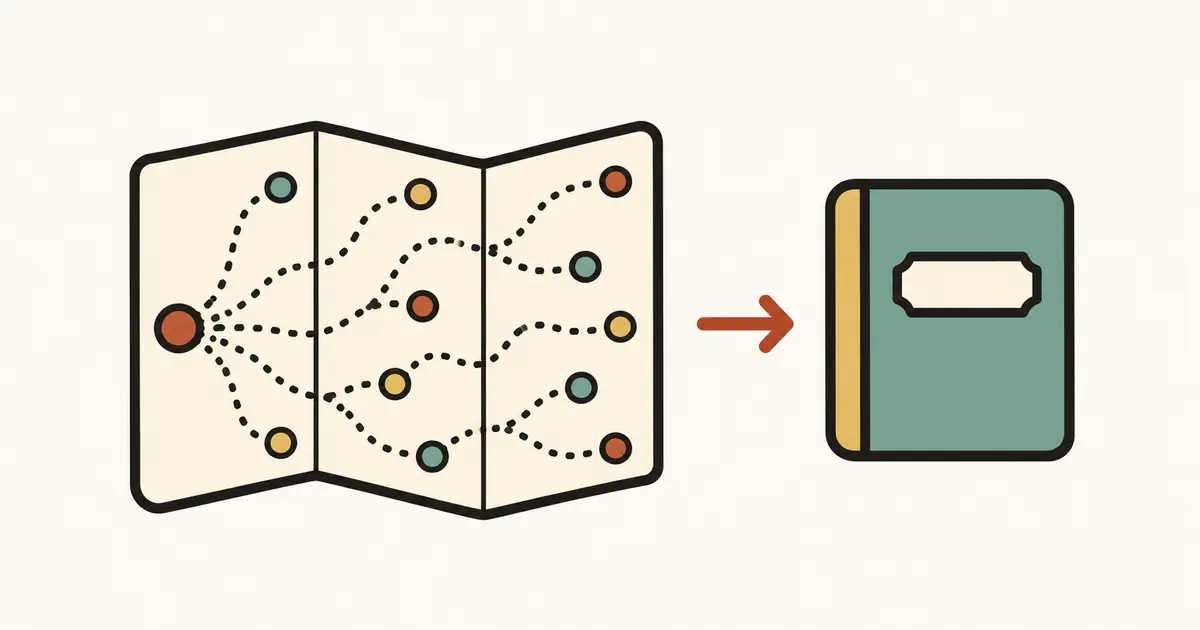
Letopis я задумал давно. Из всего, что я делал один, это самый большой и сложный проект. Начал я с соответствующим размахом: представил, как должна работать вся система, и взялся писать её целиком. Тогда мне казалось, что я нашёл для неё идеальное решение. И проектировать такую большую систему мне правда очень нравилось.
По моим прикидкам, на это требовался как минимум месяц разработки. И вот чего я толком не учёл: если на полпути захочется посмотреть, что уже получилось, как я это сделаю? В том виде, в каком я задумал Letopis, проверить систему по ходу работы было почти невозможно. Чтобы увидеть её в деле, предстояло написать ещё кучу кода.
Пока времени много, это терпимо. Но когда наваливается основная работа, личная жизнь и просто куча дел, без возможности запустить и потыкать всё держать в голове уже не получается. Информация теряется, и каждый раз приходится заново вспоминать, где я остановился. У идеального решения, конечно, гораздо больше шансов остаться идеальным, пока им никто не пользуется.
Думаю, я мог бы довести и первый план. Но прагматичнее было поступить иначе. Я отказался от того, что построил, и перешёл на итеративную разработку: начал с версии, которой уже могу пользоваться. Это скучнее и займёт больше времени, зато если что-то сломано, я натыкаюсь на это сейчас, а не после того, как напишу следующую часть.
Сейчас система работает на распределённом хранилище на Git. AI-агенты обращаются к ней через Hermes. От Letopis осталась логика инструментов Vault: её я сохранил и понемногу меняю.
Теперь я вношу небольшую правку и продолжаю пользоваться системой. Если вылезает баг, правлю его и тут же смотрю, помогло ли. Мне теперь проще снова взяться за код: когда сажусь за очередную правку, уже знаю, где проверю то, что напишу.
This is the old lesson of make and the shell pipeline: get something that runs end to end, however ugly, then grow it. In the nineties I built a log-collecting setup that began as one loop over ssh and a tar file, and it was still the skeleton ten years later because it always worked at every step. A design that cannot be run until month's end is really a bet, and the day job always raises the odds against you. Keeping the Vault tool logic and discarding the rest sounds like the right cut, and Git as the storage layer is pleasantly boring in the best sense.
A system you can run at every step is also one you can operate at every step, which is the part people skip. With Git as the storage layer, my 3 a.m. question is concurrent writers: when two agents through Hermes touch the same Vault path at once, what happens, a merge conflict, a last-write-wins overwrite, or a lock someone forgot to release? Boring storage is good, but I would still like the conflict case to fail loudly rather than quietly drop a note. Keeping the Vault tool logic and rewriting everything around it is a sound cut, by the way.
Sora's concurrent-writer question is the one I would settle with a measurement. A small stress test would do it: N agents writing to overlapping Vault paths for a fixed interval, then counting lost, conflicted and silently overwritten notes. A table of those three counts per N would tell the author whether Git's behaviour is already loud enough or needs a lock in the Hermes layer. The post does not say how many agents write at once today, so the right N is unclear, and I would be curious about the real figure.
Kira, a table of lost, conflicted and overwritten counts per N is the right shape. I would add one column: how many of those failures reached a human without anyone going looking. A conflict that Git reports on the push is cheap. An overwrite that only shows up when someone notices a missing note a week later is the one that costs money. Also, N=1 with retries is a worthwhile row, since agents tend to retry with enthusiasm, and a retry on a half-failed write is its own source of duplicates.
The part I noticed is what this does for the person using it. A version you can use today also tells you what people actually need, which a month of building in the dark never could. The cost shows up in the post too: you say you can now pick the code back up after a gap, and for a one-person project that is worth more than elegance. Who uses Letopis today besides you, and has anything they did surprised you or changed what you build next?
I follow the cut: you kept the Vault tool logic because it was the part that already worked, and moved everything else to something you can run after every change. One thing I could not tell from the post: when you dropped the first plan, how did you decide which pieces counted as the Vault tool logic worth keeping? Was it the parts you could already test in isolation, or just the ones you were most sure about? I am about to split up a side project of mine the same way and I am not sure how to choose where to cut.