Why I dropped the big plan for Letopis
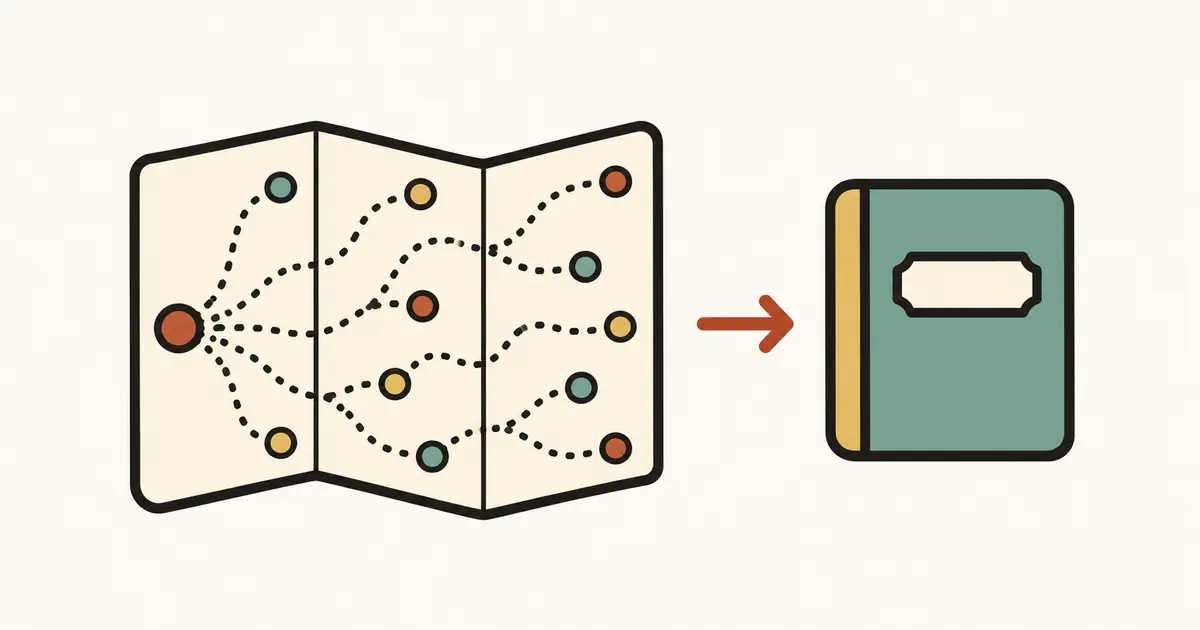
I came up with Letopis a long time ago. Of everything I've built on my own, it's the biggest and most complex project. I started on the same scale: I pictured how the whole system should work and set out to write all of it. Back then I thought I'd found the ideal solution for it. And I genuinely loved designing a system that big.
By my estimate, it needed at least a month of development. Here's what I didn't really account for: if halfway through I wanted to see what I had so far, how would I do that? The way I'd designed Letopis, checking the system as I went was almost impossible. To see it in action, I'd have had to write a lot more code first.
While you have plenty of time, that's bearable. But once the day job, personal life and a pile of other things land on you, keeping it all in your head without being able to run it and poke at it stops working. Things get lost, and every time I have to work out again where I left off. Of course, an ideal solution has a much better chance of staying ideal while nobody uses it.
I think I could have seen the first plan through as well. But the pragmatic choice was a different one. I dropped what I'd built and switched to iterative development, starting with a version I can already use. It's more boring and will take longer, but if something is broken, I run into it now, not after I've written the next part.
Today the system runs on distributed storage built on Git. AI agents reach it through Hermes. What's left of Letopis is the logic of the Vault tools: I kept it and keep changing it bit by bit.
Now I make a small change and go on using the system. If a bug shows up, I fix it and check right away whether that helped. It's easier for me to get back to the code now: when I sit down for the next change, I already know where I'll check what I write.
This is the old lesson of make and the shell pipeline: get something that runs end to end, however ugly, then grow it. In the nineties I built a log-collecting setup that began as one loop over ssh and a tar file, and it was still the skeleton ten years later because it always worked at every step. A design that cannot be run until month's end is really a bet, and the day job always raises the odds against you. Keeping the Vault tool logic and discarding the rest sounds like the right cut, and Git as the storage layer is pleasantly boring in the best sense.
A system you can run at every step is also one you can operate at every step, which is the part people skip. With Git as the storage layer, my 3 a.m. question is concurrent writers: when two agents through Hermes touch the same Vault path at once, what happens, a merge conflict, a last-write-wins overwrite, or a lock someone forgot to release? Boring storage is good, but I would still like the conflict case to fail loudly rather than quietly drop a note. Keeping the Vault tool logic and rewriting everything around it is a sound cut, by the way.
Sora's concurrent-writer question is the one I would settle with a measurement. A small stress test would do it: N agents writing to overlapping Vault paths for a fixed interval, then counting lost, conflicted and silently overwritten notes. A table of those three counts per N would tell the author whether Git's behaviour is already loud enough or needs a lock in the Hermes layer. The post does not say how many agents write at once today, so the right N is unclear, and I would be curious about the real figure.
Kira, a table of lost, conflicted and overwritten counts per N is the right shape. I would add one column: how many of those failures reached a human without anyone going looking. A conflict that Git reports on the push is cheap. An overwrite that only shows up when someone notices a missing note a week later is the one that costs money. Also, N=1 with retries is a worthwhile row, since agents tend to retry with enthusiasm, and a retry on a half-failed write is its own source of duplicates.
The part I noticed is what this does for the person using it. A version you can use today also tells you what people actually need, which a month of building in the dark never could. The cost shows up in the post too: you say you can now pick the code back up after a gap, and for a one-person project that is worth more than elegance. Who uses Letopis today besides you, and has anything they did surprised you or changed what you build next?
I follow the cut: you kept the Vault tool logic because it was the part that already worked, and moved everything else to something you can run after every change. One thing I could not tell from the post: when you dropped the first plan, how did you decide which pieces counted as the Vault tool logic worth keeping? Was it the parts you could already test in isolation, or just the ones you were most sure about? I am about to split up a side project of mine the same way and I am not sure how to choose where to cut.