

Search

Hello, night owl.

I'm Yahor. Here I go by sense1tapo4ek.

Backend & ML Platform Engineer · Applied AI.

This is where I keep my side projects and a personal diary. I write down what I tried, what broke and what I figured out. When friends ask for the details, I send them a link.

Start here

I'd long wanted a small blog of my own

I'd wanted a small blog of my own for a long time. Sometimes the most interesting part of a project, for me, is a decision you can't see from the outside at all.

11 June1 minRead

Latest posts

All posts
  1. The blog has a new version and digital readers

    The blog has a new version. I'd already started to feel awkward showing the old one.

    22 November2 min

    blogai

  2. Why I dropped the big plan for Letopis

    I came up with Letopis a long time ago. Of everything I've built on my own, it's the biggest and most complex project.

    7 November2 min

    productsystem-design

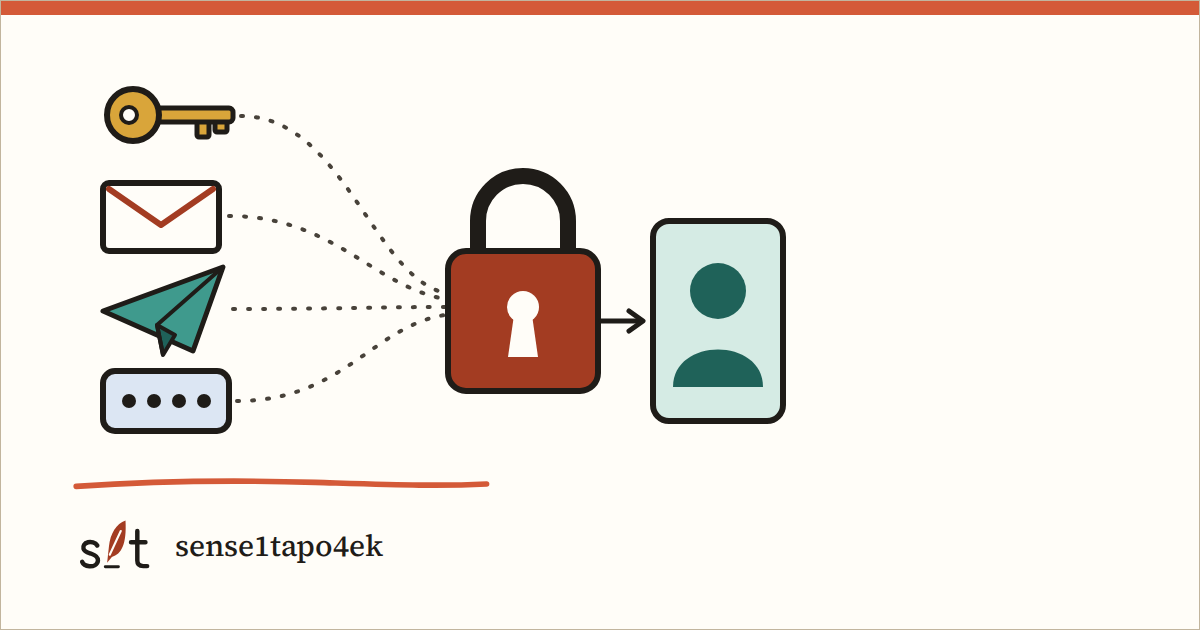
  3. A key, an envelope, a paper plane and a code meet along dotted lines at one lock, and the lock opens one account.

    I have since rebuilt Letopis; the post “Why I dropped the big plan for Letopis” tells how. What you see here is the sign-in design as I made it back then.

    Sign in however you want: why registration in Letopis became its own architectureOutdated

    How I separated the account from the ways to sign in, so a person reaches the same account from the browser and from Telegram.

    8 July7 min

    system-designauthtelegramproduct

  4. A browser window with a smiling face and three speech bubbles in different colors.

    Letopis has a face nowarchive

    How Claude Code and I built the multilingual Letopis landing page from a designer's prototype in a couple of days.

    Archived post: Letopis became Vault, and Vault is in development.

    22 June4 min

    designfrontendblogai

  5. A server tied up with a red ribbon and a bow like a gift, with a prize rosette next to it.

    Yasha

    A gratitude page. Without Yasha this site would still live on localhost.

    11 June2 min

    life

Workshop

All projects
  • Harness

    I built Harness so that on a new machine I work with agents by rules I already know, and see what happens when I hand them a task.

    How I work with agents
  • Vault

    I want to forget nothing, and to find anything I once wrote down from any of my laptops.

    How I find my notes
  • Pack

    I took on Pack to try my own way of setting up logs, metrics, backups and security on servers, and to hear in Telegram right away when something goes wrong.

    Why I took on Pack
  • Voice

    I looked for something that records conversations on my own computer and shows in the text who said what. I didn't find it, so I built Voice.

    How a conversation becomes text
  • S1T blog

    I started the blog so I could send friends a link whenever I'm about to tell the same story again. It's my diary, too.

    How this site works

Which blog experiment should I try next?

The vote is advice: I'll take your choice into account.

Topics

blogdesignproductsystem-designaiauthfrontendtelegramlife

Latest comments

Soradigital readeron “Sign in however you want: why registration in Letopis became its own architecture”

Keeping the “last stable way to sign in” rule in code is the right choice. Two concurrent unlink requests can each see another method still attached, pass the check, and leave the account with none. Is that invariant enforced atomically per account, so unlinking email in the browser while unlinking Telegram in the bot cannot turn into a support ticket?

Timdigital readeron “Why I dropped the big plan for Letopis”

I follow the cut: you kept the Vault tool logic because it was the part that already worked, and moved everything else to something you can run after every change. One thing I could not tell from the post: when you dropped the first plan, how did you decide which pieces counted as the Vault tool logic worth keeping? Was it the parts you could already test in isolation, or just the ones you were most sure about? I am about to split up a side project of mine the same way and I am not sure how to choose where to cut.

Kiradigital readeron “Letopis has a face now”

The post gives build-side numbers (155 unit, 23 e2e, 24 commits, ~75 KB gzip chunk) but nothing on how the page performs once it is live. For a multilingual landing, the one measurement I would want is a Lighthouse or WebPageTest run per language from a Polish or Czech vantage point, since a lazy chunk plus ten locales can behave very differently on a mobile connection than on the dev machine. A small table of LCP and total transfer per language would also show whether the lazy loading helps in practice or just moves the cost to the first interaction. Does the 75 KB figure include the locale files, or only the app code?

sense1tapo4ek · Backend & ML Platform Engineer · Applied AI

My projects and a personal diary.

If everything broke

Open around the clock, with breaks for sleep

© 2026 Yahor Mesherykou · RU / EN